Upgrade your walking
We can all agree that most of us know how to walk.
However, many of us aren’t walking as optimally as we can be.
Our walking mechanics have been impacted by footwear, accessories like purses, our phones, the chairs we spend an abundance of time in, and potentially postural changes from years of low movement variability (not challenging our joints in their fullest expression).
Today I’d like to share more about what optimal walking mechanics can look like, techniques to enhance efficiency and speed, exercises to improve walking mechanics, and common mistakes to dodge like dog poop on a sidewalk.
Key Principles for Optimal Walking Mechanics
Posture: Maintain an upright, "tall" posture with your head up and eyes looking 10-20 feet ahead, rather than at your feet. If you need to look down, drop your gaze, not your head. Keep shoulders back, down, and relaxed to prevent upper body tension. This is the secret to also upgrade your confidence in 3 seconds.
Core Engagement: Keep abdominal muscles lightly engaged to support the spine and maintain a neutral pelvis—avoiding excessive arching of the back or rounding of the shoulders.
Foot Strike: Aim for a "heel-to-toe" roll: land on the heel and roll through to the toes. This reduces the "thud" of a flat-footed landing and lowers joint impact.
Propulsion: Instead of falling forward with each step, actively push off with the rear foot using your glute muscles (imagine wiping gum off the ball of your feet), which helps drive the body forward.
Arm Swing: Allow arms to swing naturally from the shoulder, not the elbow, in rhythm with opposite legs. This means keeping your hands free from pockets, holding purses, phones, etc.
Stride Length: Avoid overstriding (taking long steps), which increases impact on joints and slows you down. Opt for shorter, more frequent strides.
Wear Appropriate Footwear: Ideally medium to low cushioning and a flexible sole to facilitate natural foot mechanics (if you bend your shoe, it shouldn’t feel too stiff), and a wide toe box to allow adequate propulsion from toe-off and prevent bunions.
Techniques to Enhance Efficiency and Speed
Increase Cadence (more steps per minute): Aim for a walking tempo of 100-120 beats per minute (BPM) for better efficiency and mechanical loading for your joints.
Give interval walking a shot: Alternate 1-3 minutes of slow, casual walking with 1-3 minutes of fast, "brisk" walking (roughly 70% of max effort) for 15-30 minutes working up to 3-5 times per week to improve stamina, muscle strength, and cardiovascular health.
Mindful Walking: Practice "kissing the earth" with your feet, focusing on a soft, controlled foot placement to reduce noise and impact.
Exercises to Improve Walking Mechanics
Glute Strength: Perform squats, glute bridges, lunges, and calf raises to strengthen the muscles involved in driving your gait. Bonus: do them barefooted.
Balance Training: Stand on one foot for 60 seconds to improve stability, which constitutes 40% of the gait cycle, and ensure you are progressing your balance exercises to more challenging ones week-to-week.
Ankle Mobility: Perform ankle and toe drills such as walking on your toes, heels, inside and outside of the feet, and sitting on your heels with tops of your feet on the ground and on the balls of feet in a kneeling prayer position (see below).
Barefoot Walking: Occasionally walk barefoot or in minimal shoes (when safe) to improve proprioception and strengthen foot muscles.
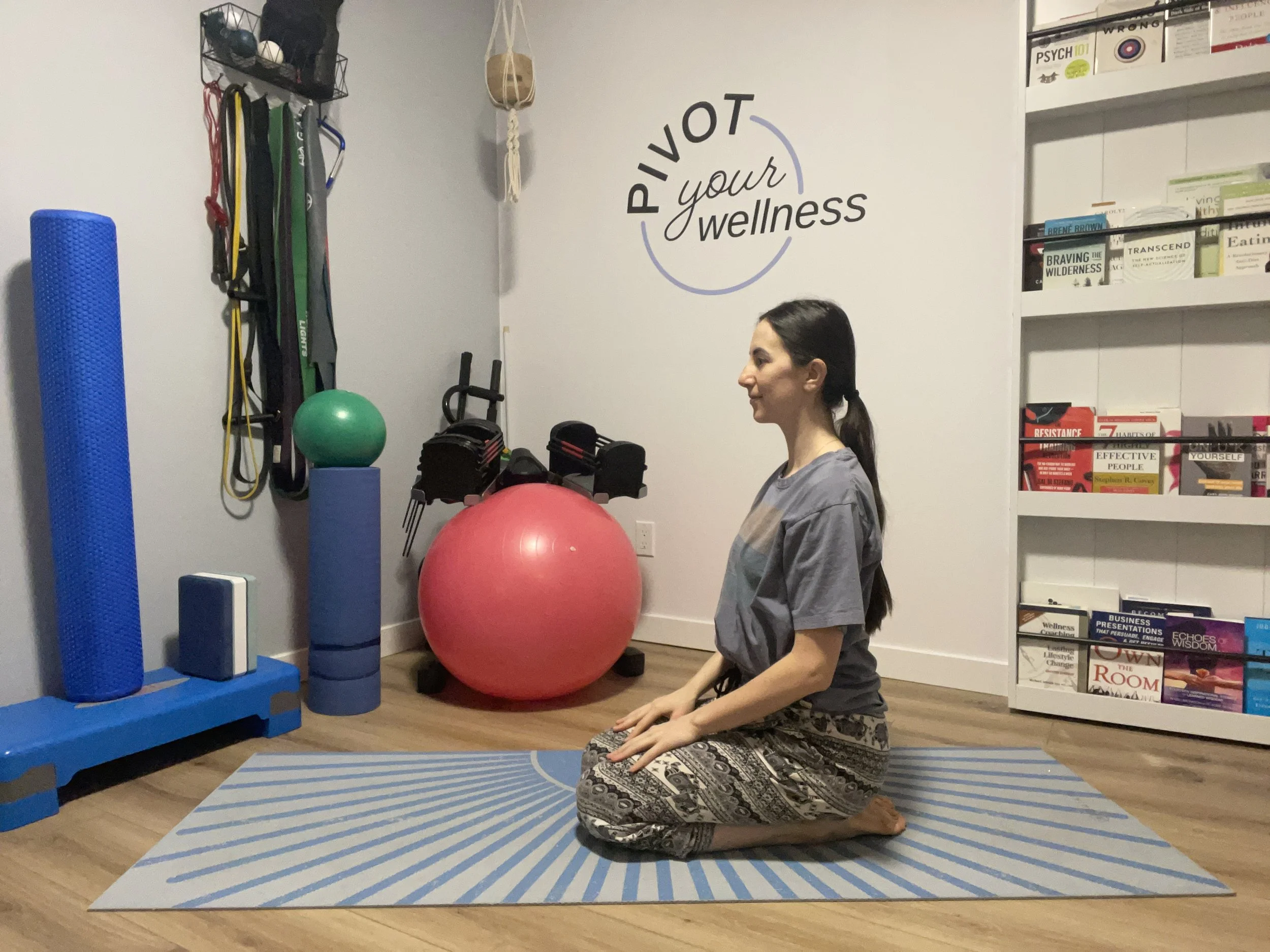
Kneeling prayer pose with tops of feet on ground to increase ankle flexibility and resilience at the knee joints.
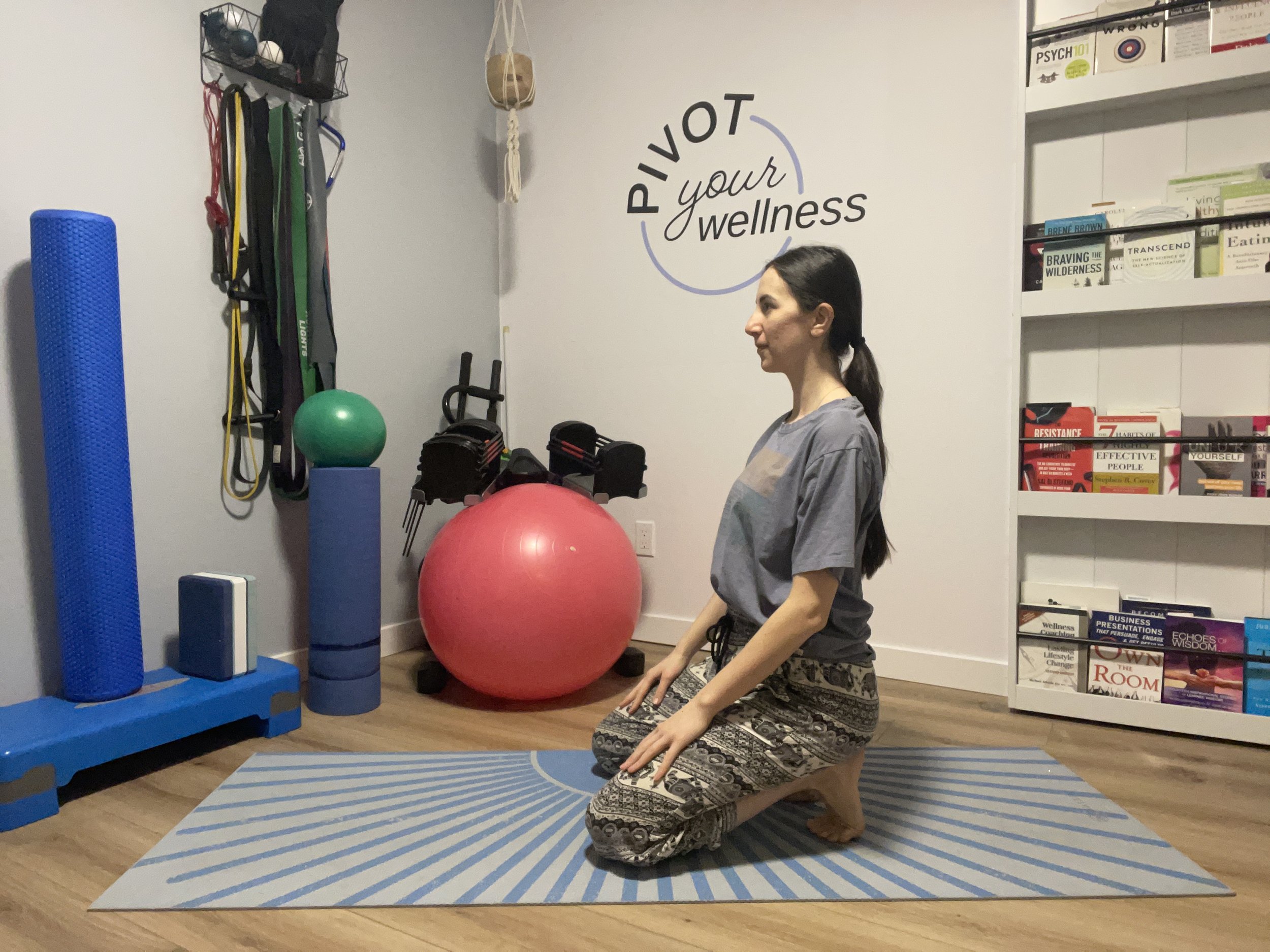
Kneeling prayer pose with balls of feet on ground to increase ankle and toe flexibility and resilience at the knee joints.
Common Mistakes to Dodge
Looking Down: Staring at the ground puts excessive strain on the neck and back.
Overstriding: Reaching too far forward causes a jarring impact.
Ignoring Arm Swing: Failing to swing arms reduces momentum and core rotation.
Rigid Torso: Allowing the torso to remain stiff instead of letting it naturally rotate.
Wearing Over-Cushioned Shoes: These prevent your feet from receiving sensory feedback from the ground which can weaken foot muscles and lead to foot, knee and hip pain and dysfunction.
Now, we don’t want to overthink how to walk when it’s something we figured out on our own as infants and toddlers.
My guidance is to choose one of these cues/changes, integrate it over 1-2 weeks, see how you feel, and move on to the next small change. Allow your body to adjust and be sure to incorporate recovery tools like rolling your feet on a lacrosse ball, foam rolling, active mobility and full body strength training.
Great sleep, low stress and high quality nutrition goes a long way as well.
As Matthew Wilder said, “ain't nothin' gonna break your stride”. These tips will enhance it.
Time to get out there and practice what we’ve learnt!
If you like, let me know how it goes by emailing me at michelle@pivotyourwellness.com.